
Roofing for modular and prefab buildings: designing and installing a roof that keeps up with off-site construction
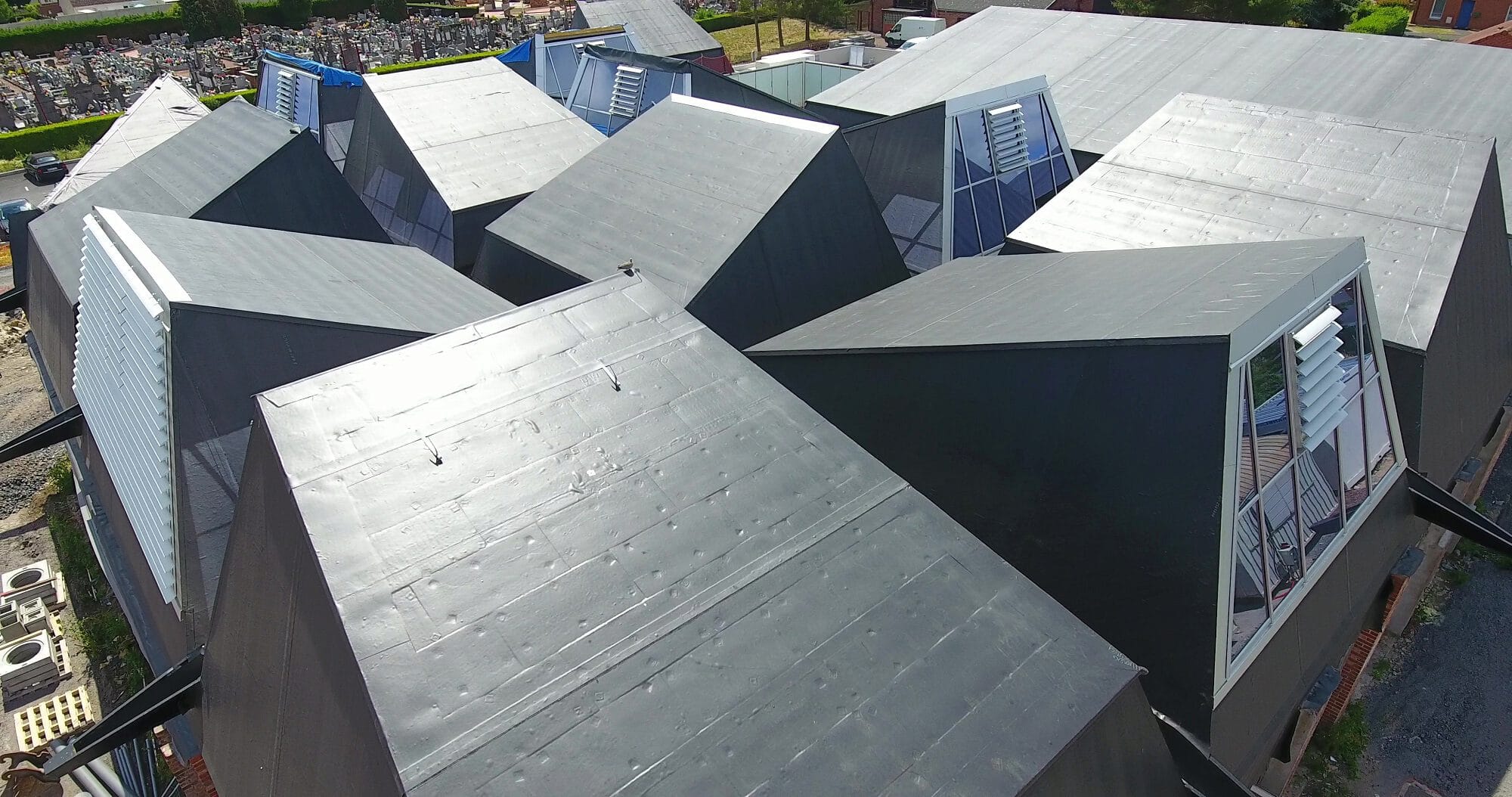
When does a roof go on? On a modular project, the answer is often: before the building is standing. Each module can arrive on site with its roof already covered and its water tightness checked. Most of the work has moved indoors, leaving only the joints between the modules to be completed on site. So what does that mean for the way the roof is designed and installed?
The work moves indoors
Prefabrication and modular construction move much of the building process into a controlled factory environment. Off-site production improves productivity on site, resulting in greater construction efficiency, with cost reductions alongside enhanced quality.¹
Because most of the work is carried out in that environment, exposure to site-related health and safety hazards can be reduced.⁴
For roofing, that changes not only what the system needs to deliver over its lifetime, but also when and where each layer is installed.
With more work completed in the factory, quality checks can happen before the modules leave for the site. And once a module is finished, it can remain in storage until it is needed on site.⁴
The roof goes on first
On a modular project, the roof covering can be installed before the module leaves the factory.⁴ Elevate RubberGard EPDM is a single-ply rubber waterproofing membrane that can be installed in a single layer.⁶ For modular construction, the roof membrane can be fully adhered or mechanically fixed, and Elevate offers water-based and solvent-based adhesives for adhesion.²
Installation remains flame-free, with no torch or hot work of any kind required.² As much of the detailing as possible is carried out in factory conditions too, which limits the substrate’s exposure to dust, pollution and moisture.⁴
Before the finished module travels to the site, its water tightness is checked and verified off site.² So if you specify the roof, that check sits in the factory rather than on the finished building.
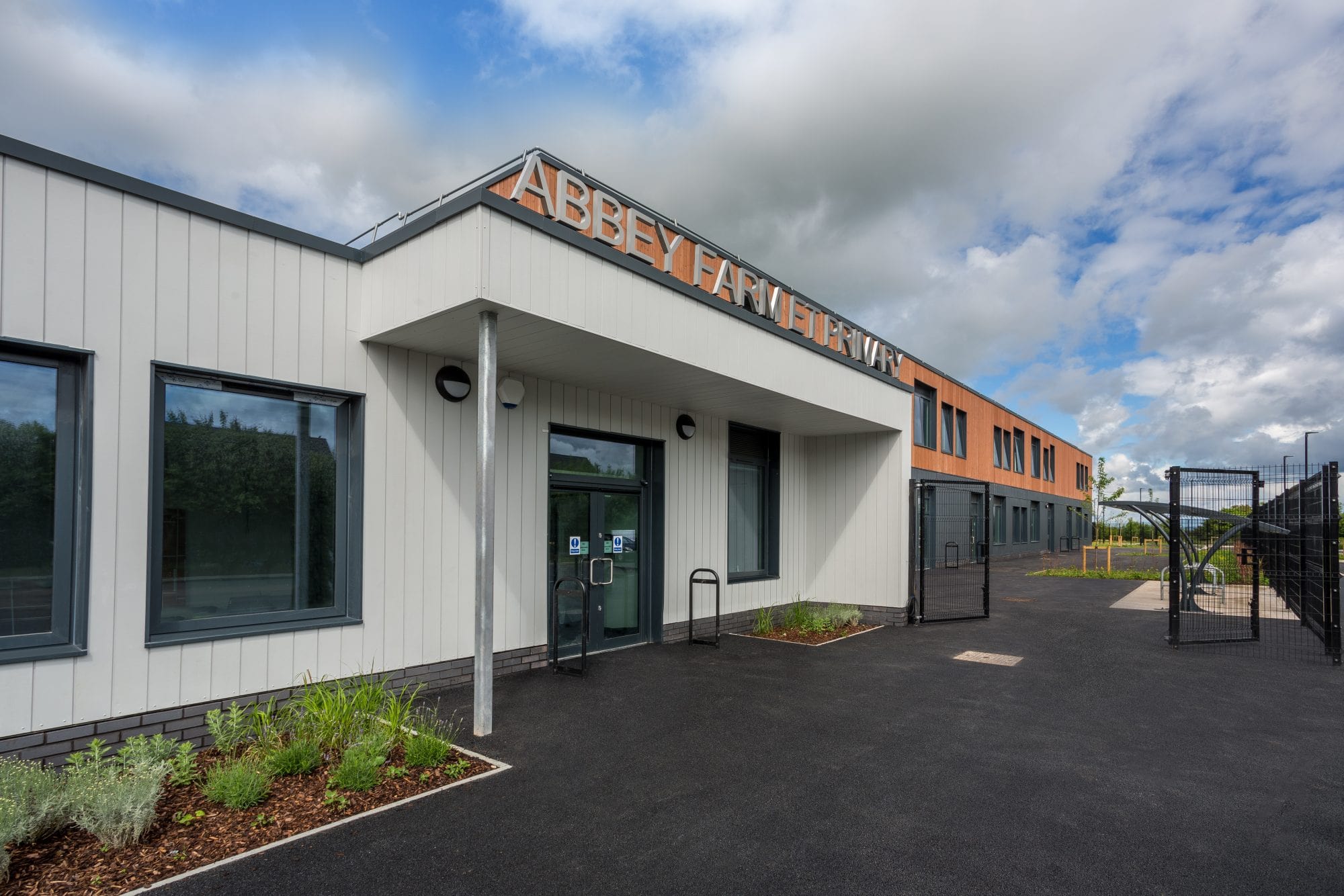
Abbey Farm Educate Together Primary School in Swindon shows how this can work in practice. The school, built for 460 pupils, was produced off site by specialist Reds10. Each module's roof was waterproofed with a 1.1 mm Elevate RubberGard EPDM membrane, fully adhered, before the modules were transported and craned into place.⁸
Fewer seams to complete
Bigger membrane panels can help reduce the number of seams needed on a modular roof.² RubberGard EPDM comes in sheets up to 15.25 m wide and 61 m long, so large roof areas need fewer of them.⁶
On many modules, a single sheet can cover the complete roof surface without a seam, which reduces the number of seams to complete on site and the offcuts generated during installation.²
Once the building is assembled, the membrane still needs to accommodate the building’s movements and the temperature fluctuations it meets. RubberGard EPDM can elongate by more than 300% and remains flexible down to -45°C.⁶
Only the joints remain
Once the modules reach the site, most of the roof covering is already in place. The remaining work is concentrated around the joints between the modules.⁵
Elevate QuickSeam products and flashings are designed for these details.⁵ The seaming system does not require sophisticated or costly equipment.⁶
Elevate has a full range of matching accessories for the details on a modular roof: seaming tapes, pre-molded flashings, uncured flashings, primers, bonding adhesives, etc.²
So if you install the roof, most of the work has already been completed under factory conditions.⁴ What remains is the work on the joints between the modules and the details around them.⁵
Built for long-term use
Modular construction may shorten the building phase, but the roof still needs to perform over the long term. EPDM has an expected service life of 70 years under normal conditions of use.³
RubberGard EPDM requires limited maintenance. Regular inspections are recommended, and Elevate QuickSeam products can be used for repairs even after many years of service.⁵, ⁶
Modular buildings can also be relocated or adapted after construction.⁴ Single-ply roofing membranes can also be used as the waterproofing layer beneath vegetated roof systems* and solar installations.⁷
From factory to finished roof
Modular construction changes where much of the roofing work takes place. Instead of completing the full roof on site, large parts of the system can be installed and checked in the factory, leaving mainly the joints and final details for the site.
That calls for a roofing system that fits the construction process as well as the finished building.
Want to explore the membrane, accessories and detailing options for modular and prefab construction?
Sources
¹ Holcim, The Future of Sustainable Construction, p. 4-5.
² Elevate, Modular buildings, roofing applications. https://www.holcimelevate.com/benelux-en/roofing/applications/modular-buildings
³ Based on an independent study conducted by SKZ – Testing GmbH (2024).
⁴ Elevate, Modular construction. https://www.holcimelevate.com/uk-en/news/modular-construction
⁵ Elevate, Embracing the future with modular construction. https://www.holcimelevate.com/benelux-en/insights/embracing-the-future-with-modular-construction
⁶ Elevate, RubberGard EPDM waterproofing membrane. https://www.holcimelevate.com/benelux-en/roofing/epdm/rubbergard-epdm
⁷ Holcim, The Future of Sustainable Construction, p. 17.
⁸ Elevate, Abbey Farm School Swindon. https://www.holcimelevate.com/uk-en/references/abbey-farm-school