
The ‘cool roof’ paradox

The effects of global warming are becoming increasingly palpable, with longer and more intense heatwaves becoming the norm in the summer. According to the European State of the Climate report, Europe is warming faster than any other continent, with temperatures increasing at twice the global average rate.
Buildings are, not surprisingly, struggling to keep a comfortable temperature for its inhabitants and contents. More people are resorting to air conditioning systems, which, in turn, generate more heat and more CO2 that is released into the atmosphere. According to a 2021 estimate from the French Agency for Environment and Energy Management (ADEME) 25% of French households and 40% of businesses currently have some kind of air conditioning equipment, with various degrees of efficacy.
In this context, the concept of ‘cool roof’ is gaining momentum worldwide as the solution to mitigate the overheating of buildings, virtually becoming a sort of ‘holy grail‘ in terms of energy performance, interior summer comfort and sustainability. With the EU’s tightening energy performance mandates and the increasing frequency of "urban heat island" (UHI) events in large cities like Paris, Berlin or London, understanding the physics behind these phenomena is essential.
What is a cool roof?
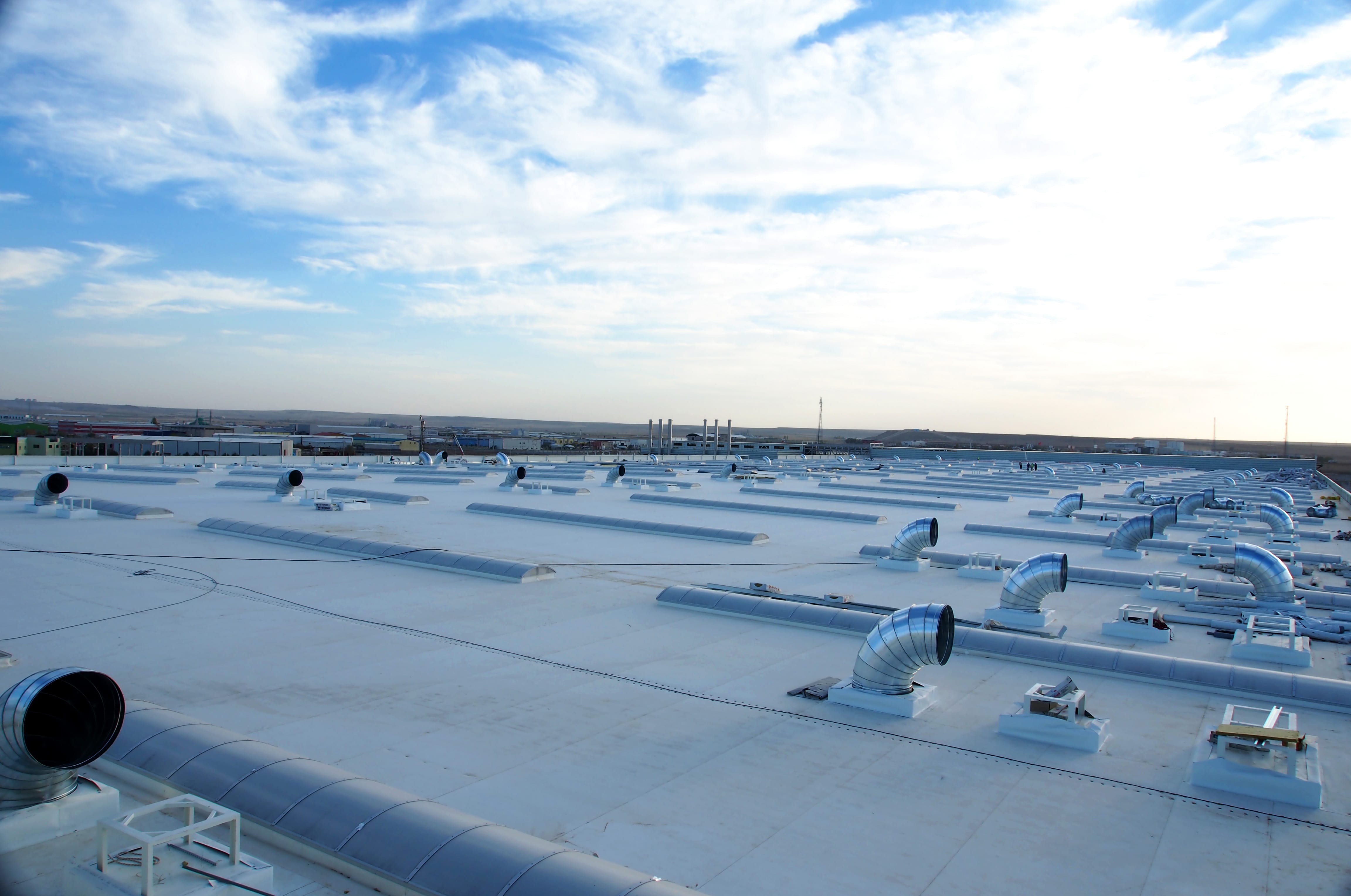
A cool roof is designed to reflect more sunlight and absorb less solar energy than a standard roof. In technical terms, it is a surface that maintains a lower temperature under the sun by maximizing two specific material properties: solar reflectance (SRI) or “albedo” (the ability to reflect sunlight back into the atmosphere) and thermal emittance (the ability of the material to cool itself down once it has become warm).
The goal of a cool roof is to reduce the amount of heat that permeates to the structure below, helping the building keep cool in the summer and consequently reducing the energy bills generated by air conditioning.
Opting for a cool roof, especially in warmer regions, would therefore seem like a no-brainer. However, much of the information available out there creates confusion about its real benefits. Is it the best solution for the inhabitants of the building? Does it achieve substantial energy savings? Does it effectively mitigate the urban heat-island effect? Is it a sustainable solution in the long-term? Frequently, these concepts are mixed up as if they were one and the same.
Not just a matter of colour
A dangerous oversimplification has taken hold in the industry: the belief that any white or light-colored roof is a ‘cool roof’, whether it’s the membrane itself that is white or light-colored, or has been painted with a light-reflecting coating. In reality, the physics of building science suggests a more complex paradox.
To start with, a subject not frequently talked about is what happens long term, as the reflective quality of the roofing membrane or coating will not stay the same forever. All light-colored exposed roofs will eventually get dirty and suffer an inevitable loss of reflectivity over time, which in the first 3 years alone can drop between 30 to 50%.
Low-grade roofing membranes that aren't properly stabilized for the UV levels we are currently experiencing will turn yellow. Once a membrane turns yellow or ivory, it stops being a "cool roof" and loses all its supposed thermal advantages.
Dirt also plays a huge factor. Already during installation, roofs get dirty when stepped on by contractors coming and going. In roofs with photovoltaic installations, foot traffic is even more intense and they get dirty faster. Afterwards, during the roof’s service life, it will get dirty due to normally occurring phenomena such as dust in suspension or blown by the wind, pollution, birds... even rain.
Regular cleaning of the roof might appear to be the solution, but experience shows that very little cleaning is actually done. The reason for this is mostly based on costs: to keep a light-colored roof clean and with its reflecting qualities as on the day it was first installed would be infinitely higher than any energy savings gained from the initial choice of color.
When specifying for future projects, it is therefore important to consider the "aged SRI" value of a roofing membrane or coating. Choosing a material that is easy to clean or has antimicrobial properties further helps maintain its performance.
The importance of the total roofing system
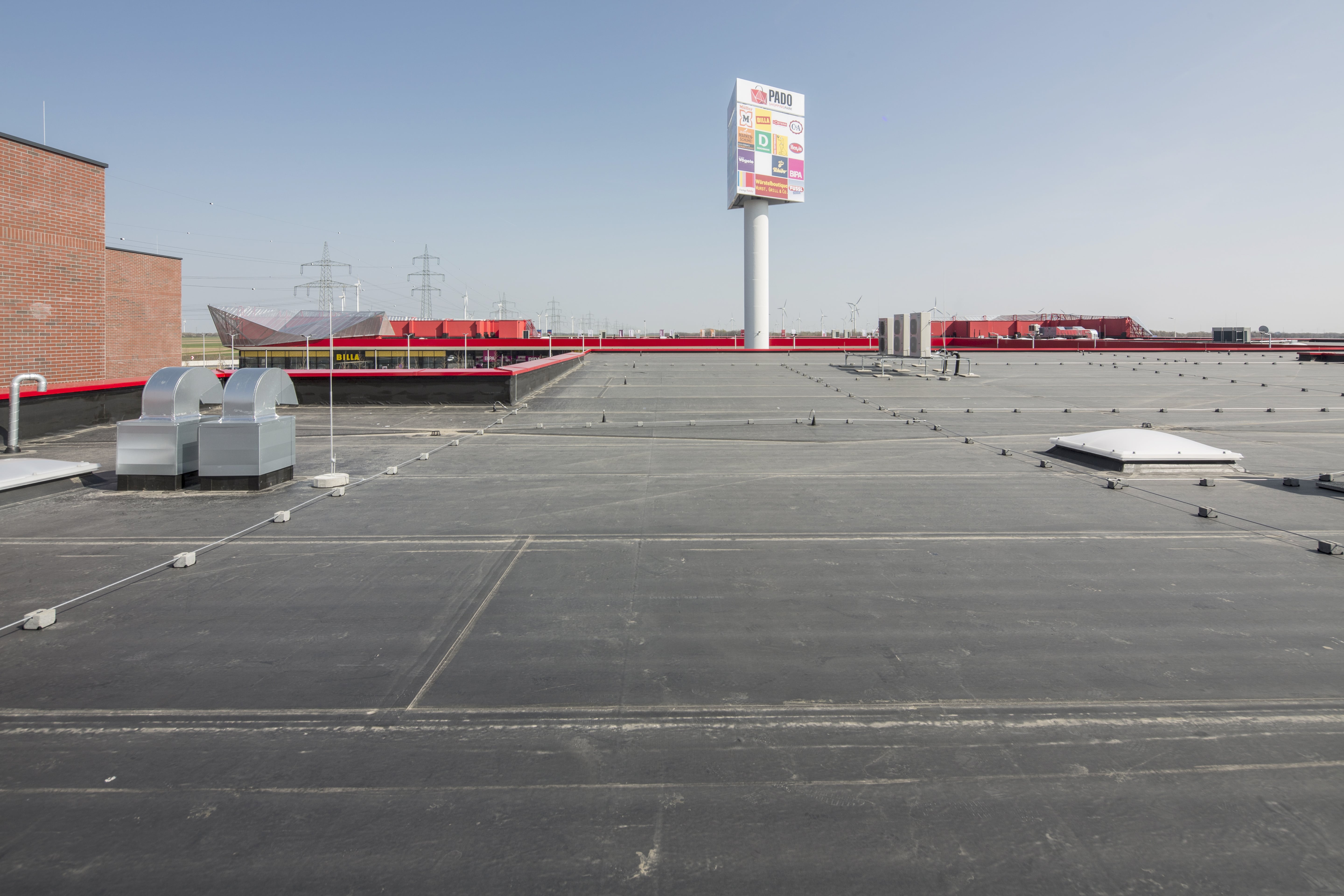
On a hot summer day, surface temperatures on a light-colored roof are around 40 to 45°C, while they can reach up to 70 to 75°C on dark surfaces. Does this mean that by implementing a white or light-colored roofing membrane or coating we automatically gain 30°C in comfort inside the building? Not really.
Everything depends on the total roof design. A roof is actually a set of construction elements: It consists of different layers, each with a specific function. In order for any roof to work properly and achieve the best thermal performance, each component must have a meaning and must work in synergy with each other. In short, we cannot consider only the top layer of the roof and not pay attention to the rest of the components.
In order to truly achieve energy efficiency on any roof, good thermal insulation has a much more significant impact than the colour of the roofing membrane. For example, if a reflective membrane or coating is used on an uninsulated corrugated steel deck, we will indeed notice a drop in inside temperature. However, if the roof is insulated at a minimum, the drop in temperature inside the building will be much more significant. Therefore, if the roof is efficiently insulated, the gain in interior comfort achieved just by installing a reflective membrane or coating becomes virtually negligible.
Is a cool-roof sustainable?
The sustainability of any roofing material depends on several factors. One of them is the energy consumption required to manufacture it (its carbon footprint). Single-ply membranes such as UltraPly TPO require less energy to be manufactured due to their low mass. In addition, its formulation is free of chlorine and halogens and, most important of all, it has a long life cycle.
The life cycle is related to the performance in use. An EPDM roofing membrane has a much longer service life than a light-colored membrane of the same thickness. This means that it will have to be replaced fewer times. If we take into account that re-roofing works generate more CO2 emissions, more waste and more costs, what is then the most sustainable membrane? The most reflective one, or the one that lasts the longest?
With regards to their effect on the urban heat-island effect, light surfaces will contribute to lower the ambient heat outside the building, and inside the buildings to a lesser extent. However, recent studies carried out by Stanford University1 show that reflective roofs do not get rid of the heat problem, but rather displace it to neighboring surfaces. In an urban setting, the largest surfaces are not the roofs, but the streets and the facades. Reflective roofs can bounce the energy to large neighboring surfaces of glass curtain walls or concrete facades. These surfaces accumulate a lot of heat and are not able to efficiently release it during night hours, actually worsening the situation.
In addition, tall buildings reflect the energy to the atmosphere in such a way that may disrupt rain cycles. White surfaces minimize the vertical movement of moisture to the atmosphere. This, in turn, reduces cloud coverage, resulting in reduced rain and an increase in drought-like conditions, the opposite result of the desired effect.
In short, to be truly sustainable, a roofing membrane needs to be less demanding on the use of resources, have a long life cycle, offer great performance and be suitable for solutions such as green roofs, which, besides keeping the roof cooler in summer than a white surface, also provide oxygenation, evapotranspiration and other benefits that are really useful to truly and sustainably mitigate the urban heat island effect.
Not a ‘one fits all’ solution
The real benefits of a cool roof should be calculated according to the local climate, the geographic location, the type of building and the thermal insulation. Budget also plays an important part. A cool roof usually is an economical solution for renovations, but the cost long-term should be addressed, as well as the environmental cost.
“Going for a cool roof solution for renovating a poorly insulated building in a warm region such as the south of France can definitely be attractive,” says Jean-Luc Roudaut, Photovoltaic Prescription Manager for France at Holcim Solutions and Products EMEA. “However, in the north of France, where temperatures are cooler, questions start to arise: how much energy do I need to spend to air-condition the building in the summer vs. heating the building in winter? In winter, a reflective membrane or paint limits solar gain and can lead to an increase in heating needs, so the whole year needs to be considered, not just the summer”, he adds.
Before blindly going for an approach where reflective roof equals ‘cool roof’, if you want to efficiently improve the comfort inside a building during hot periods, lowering the need for implementing cooling systems and, consequently, lowering energy bills, we advise taking into account the following factors:
- White or light-colored roofing membranes or reflective paints are not the only option. Widen your approach to the design of the entire building (facades, surroundings of the building, insulation, available budget, etc.)
- Consider the geographic location and the type of building. Residential and industrial buildings have very specific needs.
- How well insulated is the roof? Is it a renovation or a new build project?
- Reflective roofing materials lose their reflectivity over time. Look for the ‘aged SRI’ value of the material, provided by a third party. Make sure also that the roof has a proper slope to avoid ponding water, as this will make the roof dirty faster. Regular cleaning may help restore the SRI, but it comes at a cost and it could also impact the material performance, as it may degrade the membrane faster.
- If you use reflecting coatings, avoid choosing low cost ones that are porous and can trap dirt easily. Make sure they do not release pollutants into the air or rainwater.
- The durability of the total roofing system is one of the most important factors to be considered.
Our single-ply roofing membranes offer a variety of solutions that can improve the thermal comfort inside buildings, and a cool roof is just one of them. Do not hesitate to contact one of our local representatives, who will be happy to discuss the option that best fits the requirements of your project.
*”Effects of Urban Surfaces and White Roofs on Global and Regional Climate”, Mark Z. Jacobson and John E. Ten Hoeve, Department of Civil and Environmental Engineering, Stanford University, Stanford, California